
When the tools move faster than the law
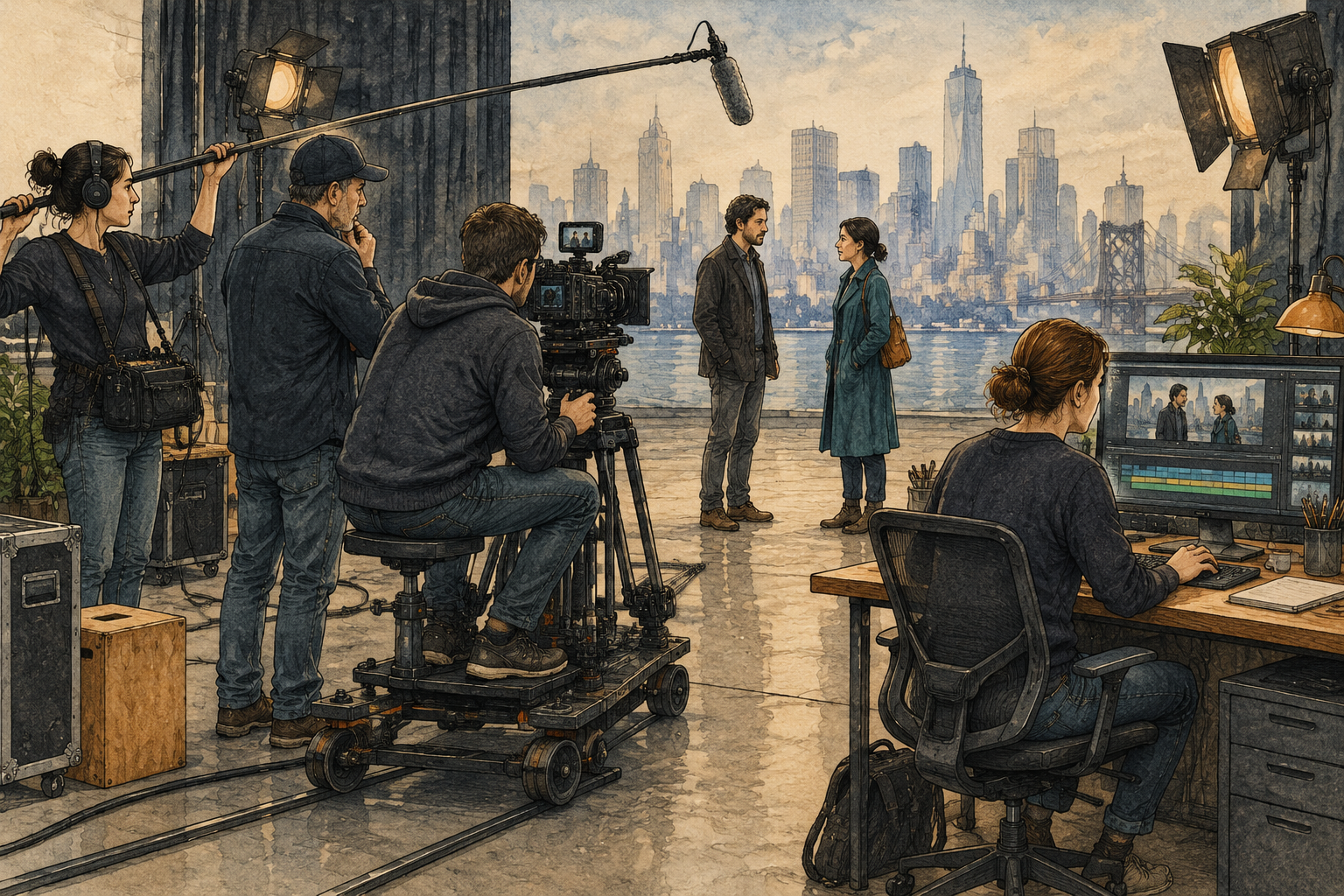
Generative AI now reaches into every stage of media — a newsroom drafts summaries and clones an anchor's voice, a film team builds city backdrops and synthesizes a performance. Work once split among writers, editors, actors and post houses can pass through a single model.
That speed is the problem the law keeps chasing. Copyright asks who contributed original expression. Publicity and privacy rules ask whose identity is used. Union agreements set consent and pay. None of these wait for a model update — and existing law still applies even where no AI-specific statute exists yet.
This lesson follows one hypothetical — “The Last Broadcast,” a film with a human-written script, generated city exteriors, human editing, and a synthetic narrator who resembles a known performer. Across the lesson you'll answer its producer's three recurring questions.
① Ownership
What did a human actually author — and can we protect it?
② Authenticity
What will audiences and regulators be told they're seeing?
③ Creative labor
Whose identity and work is used, and on what terms?
By the end of this lesson
- 1Tell a film's human-authored elements from its AI-generated ones, and separate copyright from contractual permission.
- 2Read an AI lawsuit claim critically — allegations and tracker counts versus actual rulings.
- 3Identify when a recognizable voice or likeness needs consent and separate pay.
- 4Apply deepfake and child-protection rules without overstating what courts have decided.
- 5Assemble a U.S./EU release checklist: provenance, disclosure and evidence of human contribution.
Copyright starts with a human author
In the U.S., both the Copyright Office and the courts hold a clear line: output generated purely by a machine cannot be copyrighted. Human authorship is the essential requirement. In Thaler v. Perlmutter, the D.C. Circuit affirmed that rule, and the Supreme Court declined to hear the case in March 2026.
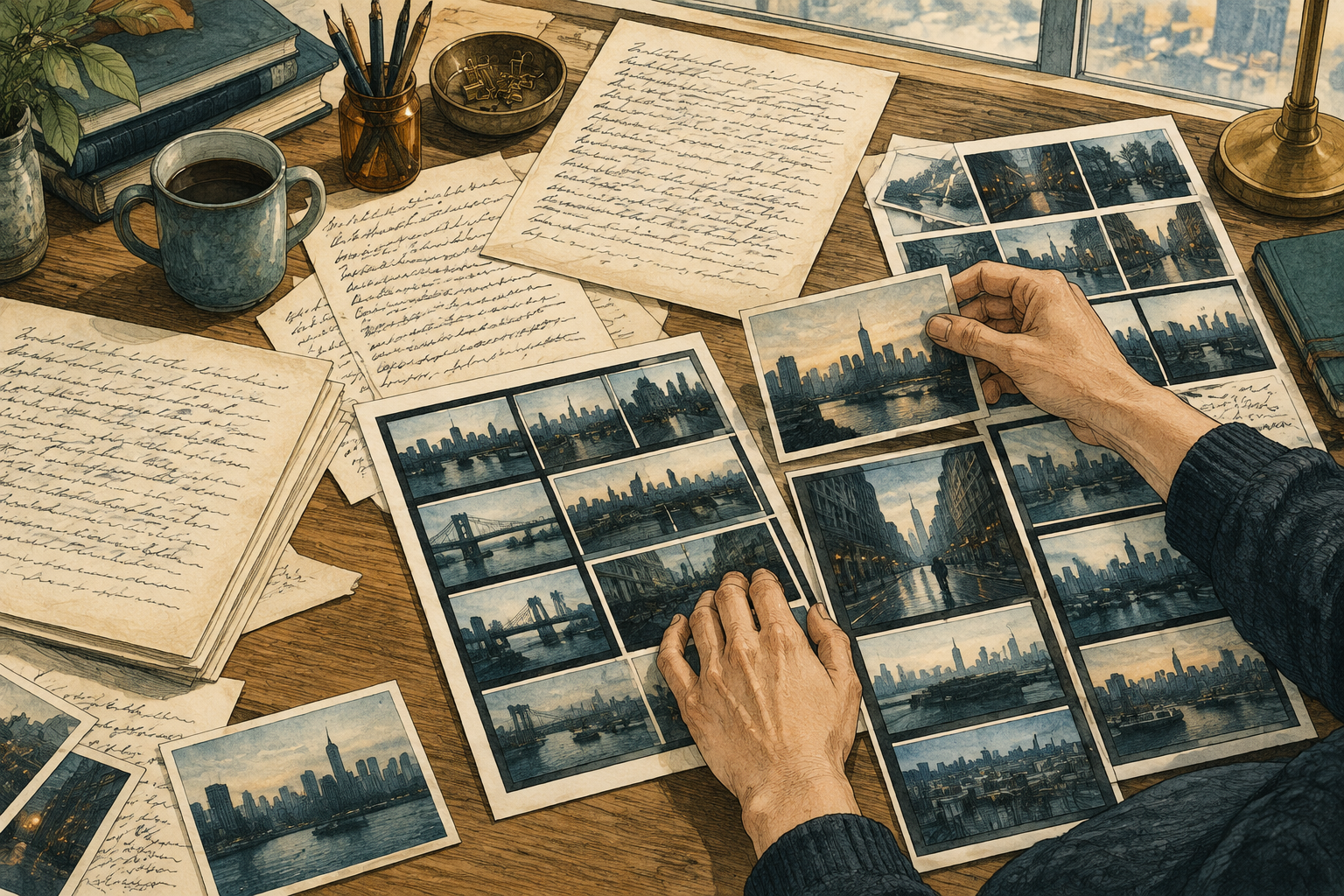
So what is protectable? Not a prompt on its own — prompts alone don't count as authorship. But the human choices layered on top do: your editing, your selection, your arrangement of elements. You can also contractually own a platform's output through its terms — but that's a private deal; it doesn't stop anyone else from copying purely AI-made output.
Protectable, or not?
Drag each element of the film into the bucket where it belongs. The test isn't “did AI touch it?” — it's “is there human expressive authorship?”
✓ Has human authorship
✕ Purely machine output
Drag the chips into a bucket — or tap a chip, then tap a bucket.
Which statement is correct?
Read the numbers before you repeat them
You'll hear big figures: roughly 250 AI lawsuits tracked, about 180 still active, with copyright the dominant category at around 145 cases. OpenAI is the most-sued company, named in roughly 55. Beyond copyright, a wave of chatbot-harm suits (wrongful death, self-harm, deepfakes) targets firms like xAI and Character.AI, plus state action such as Florida's move against OpenAI over minors' access.
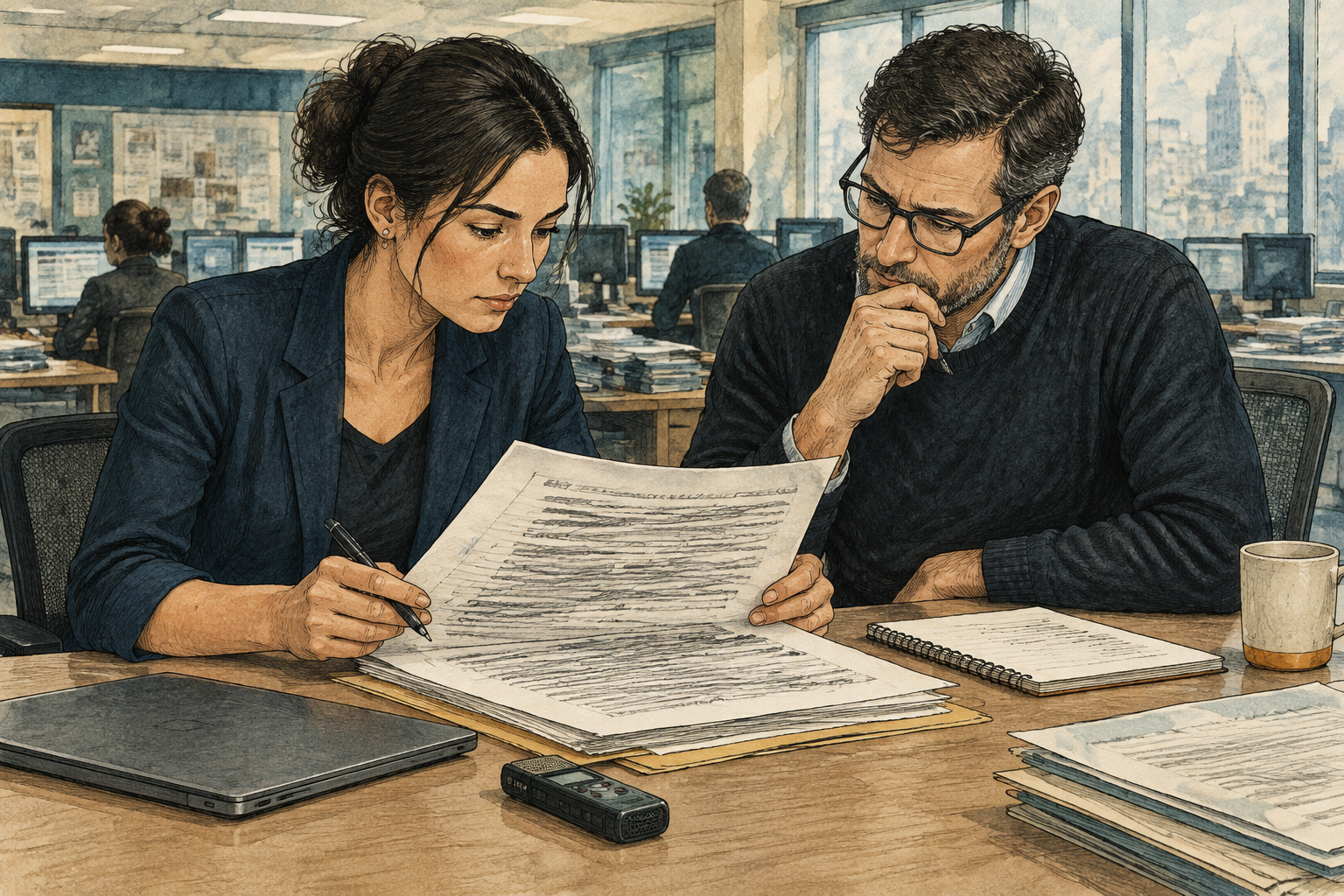
The trap is treating a filed claim as a decided fact. Click to see the difference:
Voice, likeness & digital replicas
A digital replica of a real performer is now heavily governed. Under the SAG-AFTRA 2026 TV/Theatrical agreement (effective July 1), a replica needs clear written consent describing the specific use and separate pay at the performer's usual rate. Replacing a human with a synthetic performer requires an “articulable business reason” showing “significant additional value” beyond saving money — a high bar, with uncapped damages. Replicas of minors can't depict them nude or in simulated sexual activity, including by aging up or de-aging.
Does this need consent & pay?
Our synthetic narrator resembles a working actor's voice. For each situation, decide what the SAG-AFTRA rules require.
Case A
The studio builds a digital replica of a cast member's voice to use in three extra scenes not in the original shoot.
Case B
To cut costs alone, the studio replaces a human narrator with a synthetic performer — no added creative reason.
A studio wants to replace an actor with a synthetic double purely to avoid paying them. Under the 2026 SAG-AFTRA deal, this is…
Nonconsensual synthetic media
The federal TAKE IT DOWN Act (signed May 2025) makes it a crime to knowingly publish nonconsensual intimate imagery — including AI deepfakes — with up to 2 years in prison for adults and 3 for minors. Platforms must remove reported content within 48 hours; FTC enforcement began May 2026, with civil penalties up to about $53,000 per violation. The first conviction came in April 2026.
48 states have laws on sexually explicit deepfakes; 47 criminalize AI-generated CSAM. The U.K. was first to ban AI tools built to generate CSAM, and the EU AI Act adds a “nudifier” ban effective December 2026.
One fight is still open: whether purely synthetic CSAM depicting no real child is protected speech. A federal appeals court case out of Wisconsin is testing it, and the Supreme Court may weigh in.
Proving what the audience is seeing
If “The Last Broadcast” releases in the EU, the EU AI Act Article 50 (enforceable since 2 August 2026) requires synthetic audio, image, video and text to be marked in a machine-readable, detectable way. Fines reach up to 3% of global revenue. The U.S. has no equivalent federal mandate yet — the AI Labeling Act was only introduced in June 2026. Match each compliant method to what it is:
Method
What it is
Tap a method, then tap its definition.
Under the EU AI Act's Article 50, AI-generated content must be…
The clearance stack for an AI-assisted film
No single rule covers “The Last Broadcast.” Clear each of the four legal layers below and watch the release-readiness meter fill. Tap a layer to mark it resolved.
Knowledge-check score
Fair use — a U.S. defense allowing some unlicensed uses, especially transformative ones. Transformative use — adds new purpose/character rather than replacing the original. Shadow libraries — pirate repositories of copyrighted works. Market substitution — whether an output competes with/replaces the original. Digital replica — an AI likeness or voice of a real performer. Content Credentials / provenance — metadata recording how media was made, including AI involvement.